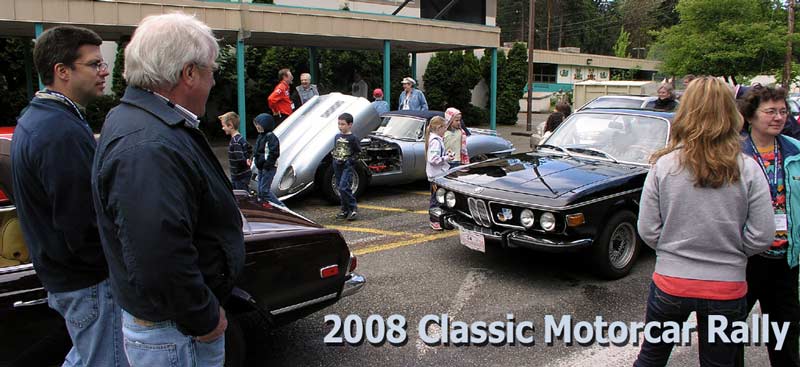
The 2008 Annie & Steve Norman Classic Motorcar Rally is finished. I don’t know our final standing, but I can tell you it won’t be very good. Dad & I were way off our game and did not do very well. Perhaps I can blame it all on the weather! 😉 We’ll find out soon, but in the meantime here are some photos. I’ll add more soon, so check back.
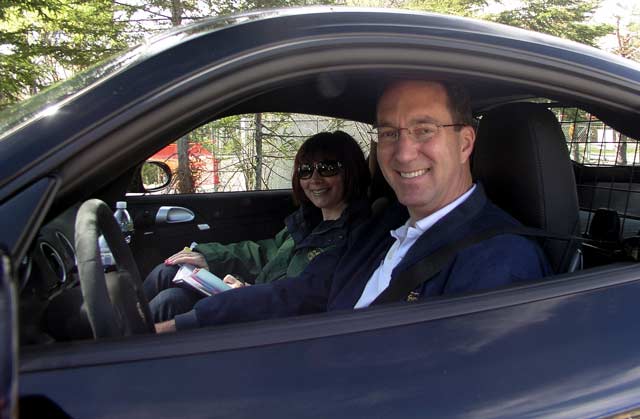
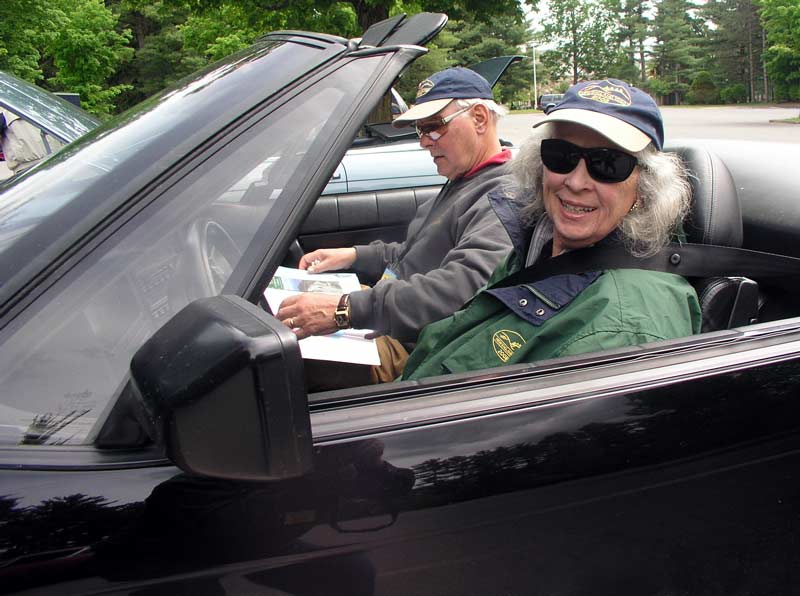
Above: Dad buckles into the Navigator’s seat to start the Rally. The top is up since it is raining. 🙁
Above: The start under the archway of the Inn at Port Ludlow.
Above: Rallymaster Doug Breithaupt gives us a countdown for the start.
We roared off, only to find our odometer not working! We reset it and it started functioning, but this first leg was an odo calibration section… so we were screwed.
Above: Annie & Steve Norman’s 1964 Bentley S3 Continental.
Above: Susan & Ken Olsen’s 1973 BMW 3.0CS
Above: Adele & David Cohen’s 1939 Bentley 4.5 Liter.
Above: Dad working on route/time calculations.
Above: Michelle & Dana (inset) Swanson, in a 1991 Mistubishi Galant VR4. They do gravel rallys in this car.
At a rest stop the Navigators all get serious and try to do as much pre-calculation as possible. Meanwhile us drivers just stand around and look stupid… or in my case, take pictures. 😉
Above: Car 1, a 1958 Alfa Romeo Guilietta run by Alan Chockie & Antoinette Slavich.
Above: A lovely little blue Fiat 500. Phil Rome, the driver ended up swapping it for a Jaguar XJ6C halfway through the first day (he is local and lives in Port Townsend) as the little Fiat could not maintain speed up long hills.
The weather was just downright crappy. The forecast kept giving us a glimmer of hope, but it never really delivered. It just kept spitting rain, mist, showers, and sprinkles all day long. We finally got a sunbreak late in the day and actually dropped the top on the last segment, but it stayed up all the next day.
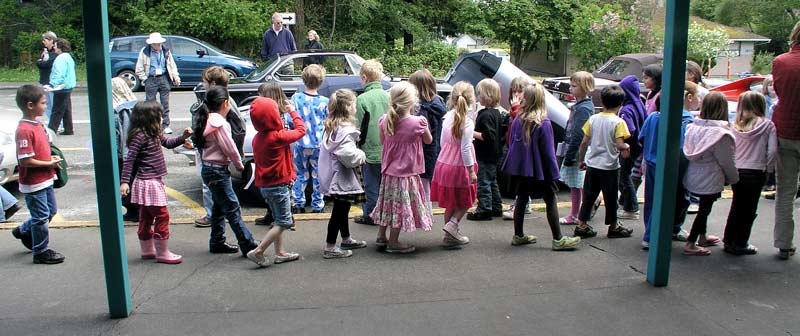
After lunch we visited a grade school in Port Townsend and all the kids came out to see the cars. I tilted the Jaguar’s bonnet up to give the kids a thrill.
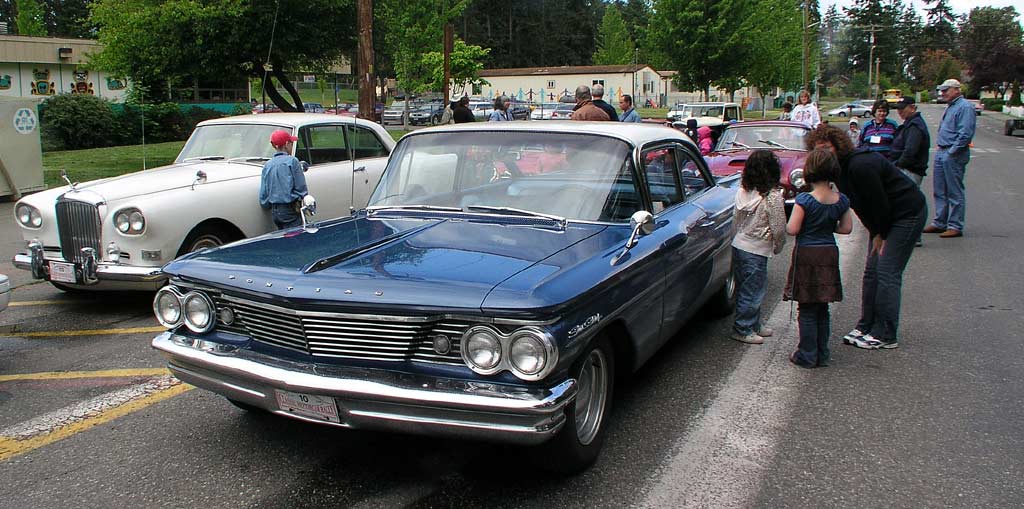
Above: Mike & Howard Becker’s 1960 Pontiac Star Chief (another father/son team.)
Above: The interior of the BMW coupe.
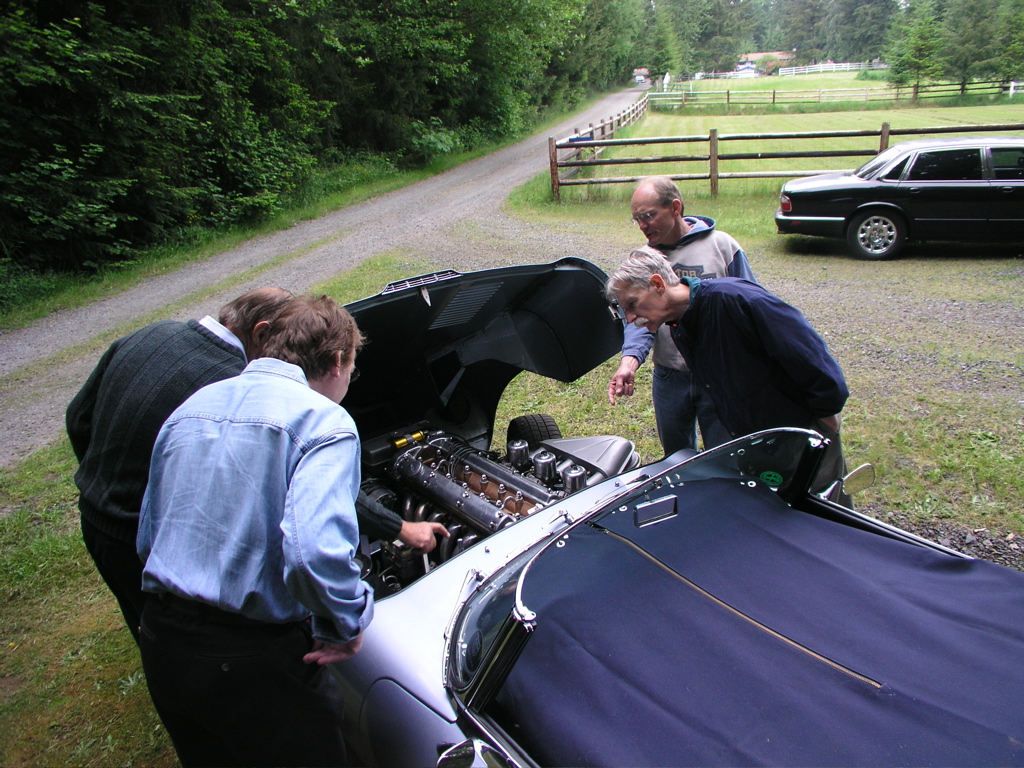
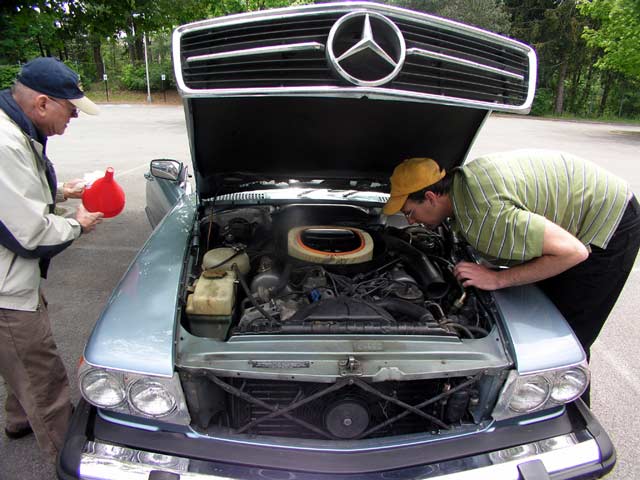
Above: Duane Crandall has a look at the engine compartment of the 1969 280sl driven by his daughter Lauren. Of course once a bonnet goes up, the boys all gather to look.
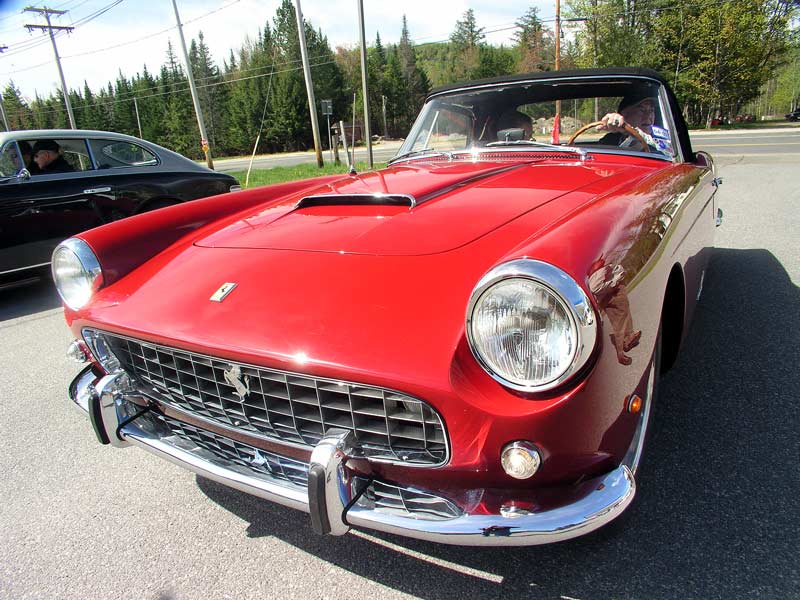
Above: Red sports cars are always a hit.
After the school, we caravanned to Bergstrom Automotive in Port Townsend, a wonderful shop in an old Hudson Dealership one block off the waterfront. It is chock-full of automobilia! My dad bought a Road & Track magazine from 1960 with a road test of a 300sl roadster. They had zillions of old car mags, books, parts, signage, etc. A gearhead’s paradise! The prices seemed very reasonable too. I highly suggest a stop there if your in the area.
Above: Bergstrom Automotive.
Above: Waiting for our check-out time in Port Townsend.
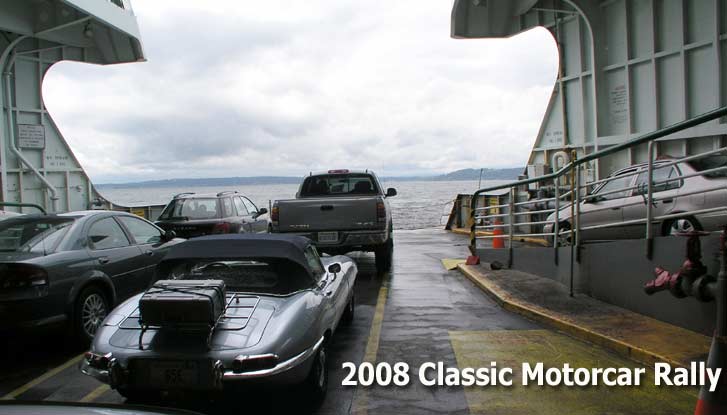
I’m in Port Ludlow, WA with my dad, once again running the Classic Motorcar Rally. We left Arlington this morning in the rain, and chose the southern route via the Edmonds/Kingston Ferry to get here. Rode the MV Spokane, arrived at the hotel, checked into the rally, attended the welcome meeting, and had a nice dinner. This hotel has the world’s worst Internet connection, so bear with me for the next few days.
Still trying to fix my weird electrical issues in the 65E. I “hot wired” the fan to the “Map Light” switch with a fused wire so at least now I can cool the car off if I need to. Mind you that is unlikely since it is freezing fricking cold and raining! My horn doesn’t work either and I ordered a relay from SNG. It arrived *literally* as we were leaving home. I went to replace it after we arrived at the hotel, only to find it is the wrong part. Grrrr.
We hosted a gathering of Jaguar folks at our home today. These are all people who have met through the auspices of E-type forum/mailing list on Jag-Lovers.org. John Bennett and his wife Eleanor from Perth, Australia were visiting their son, who lives near Seattle. I volunteered to host a get-together so they could meet other “jag lovers” in the Pacific Northwest. Of course, true to form the Pacific Northwest put on misty rain for the event. As such a small fraction of the folks I invited managed to turn up. But we had three E-types (and two XJs) and did manage to go for a nice drive on some fun roads, with John having the chance to drive two different E-types: a S3 V-12 and a S1 car.
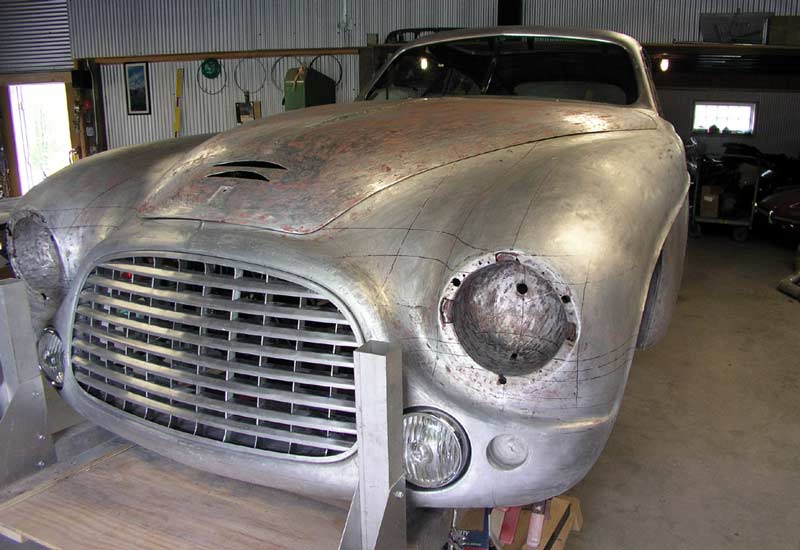
Being at RPM was like being a drug fiend in Amsterdam… it was an assault of pure car porn. I loved it. RPM is a family business: Peter Markowski and his two sons, Stephan and Eben Markowski. RPM is best known as a Ferrari shop, and the first time I went there it seemed to be 90+% Ferraris. It seems they’ve branched out a bit now … a little bit of everything. Even Jaguars! From the outside you would never know what lies within. It appears to be a typical Vermont farm, with a house and two barns. Inside the barns however is all manner of magic and delight. Here, lets have a look….
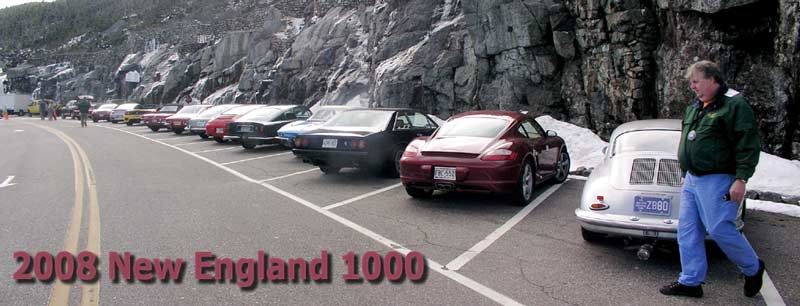
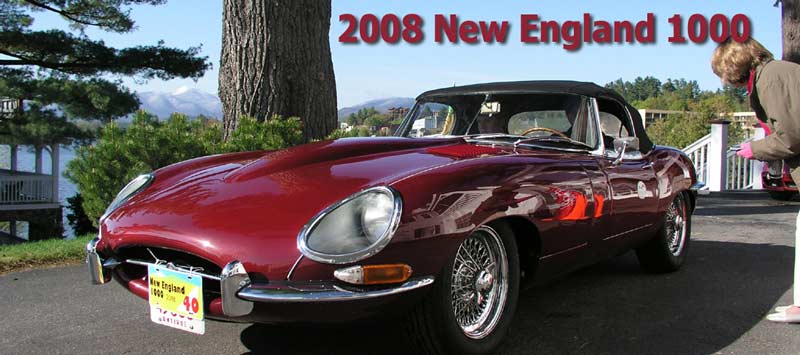
Today was the final day of the 2008 New England 1000. We visited a couple of museums and a restoration shop, while driving on some great Vermont roads with some really cool cars with really nice people.
Above: The Cadillac and a Ferrari at the start.
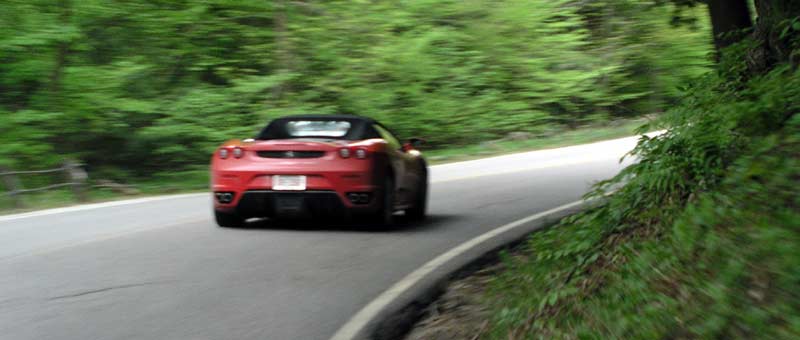
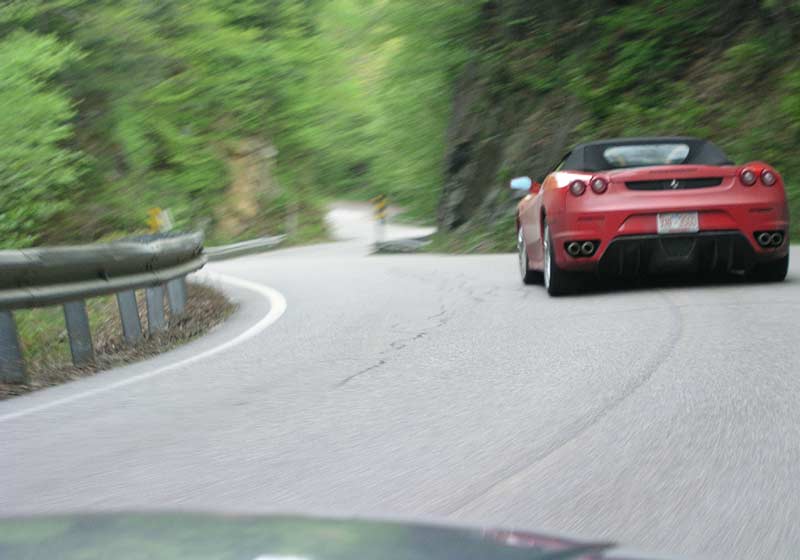
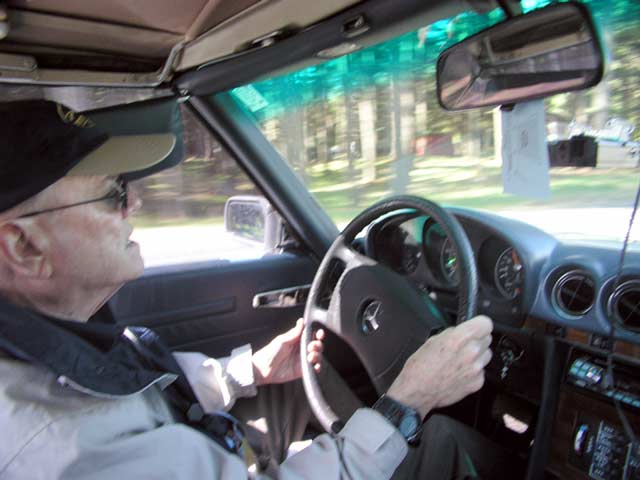
We started at the front of the hotel and drove some great two-lane backroads around Vermont in a big clockwise circle. We had been given forewarning at breakfast about police activity, since Rich Taylor, the Rally Organizer (of the perpetually wayward clock) had been stopped for speeding in his red Maserati Sebring. So we behaved ourselves and just enjoyed the segment. Dad drove, while I navigated. Route finding was intense, so I didn’t have time for a lot of photography. I did try and get some nice motion-blurred shots of a modern Ferrari along a twisty road. Most times I can nail these shots.. but sometimes I don’t quite get them…
Oh well. Not exactly what I was hoping for, but still not bad.. in their own sort of way. Like I said, I think I need some eyeballs down at my fingertips!
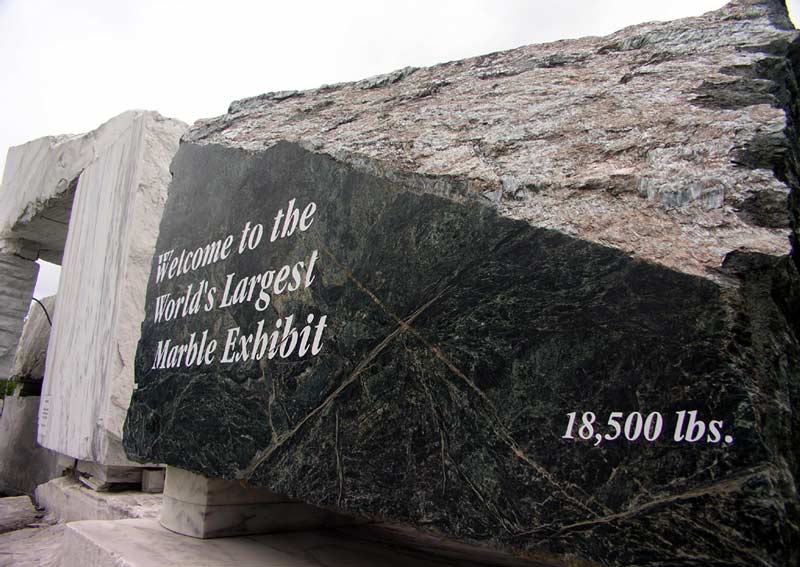
The segment finished in a town noted for marble. Everything was made of marble… the school, the fire station, the tire-stops in the parking lot. It was marble overkill!
We decided to skip the marble museum and just drive the next segment. I drove, Dad navigated. Like the first stage it was long, and intense. No photos were taken, but like the morning, we zeroed the segment again. So far, only our clock screw-up was keeping us from a Perfect Game.
This second segment of the day brought us to RPM, the shop of the official Rally Mechanics. They served us lunch amid a veritable toy store of gearhead treasures. I literally wolfed down my lunch and spent the better part of our time there shooting photos. After we cleared the checkpoint, dad took the car back into the town of Vergennes to top off the gas tank, so I was out of touch with him for most of the time at RPM.
From a start at the top of Whiteface Mountain, to Woodstock via The Trapp Family Lodge… the hills were alive with the sound of roaring engines!
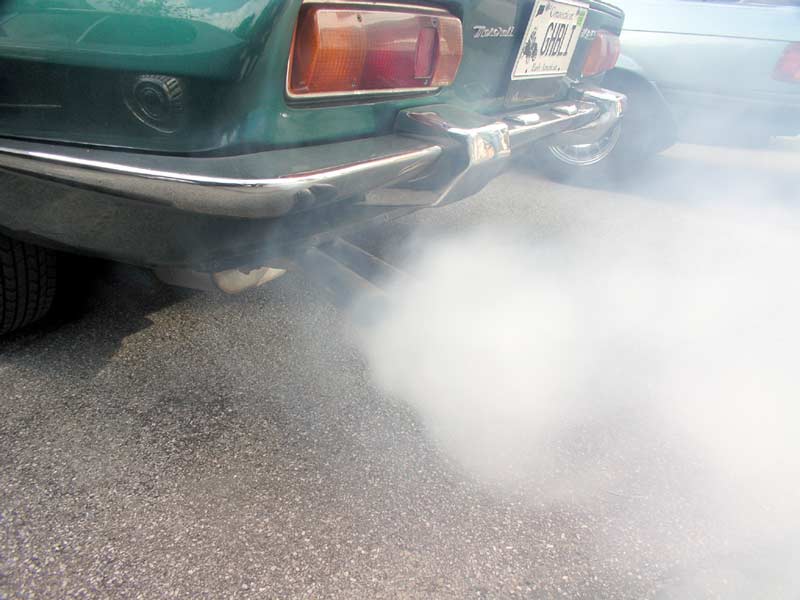
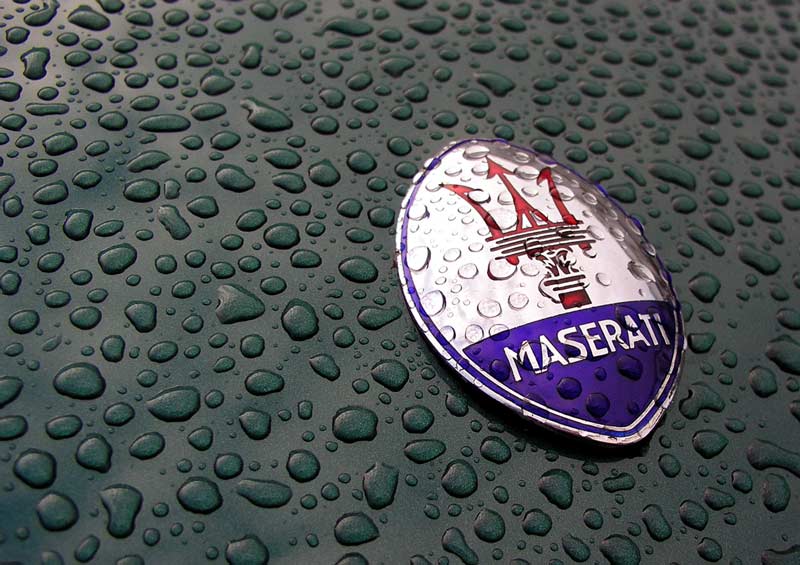
Above: A Maserati displays its carbon footprint.
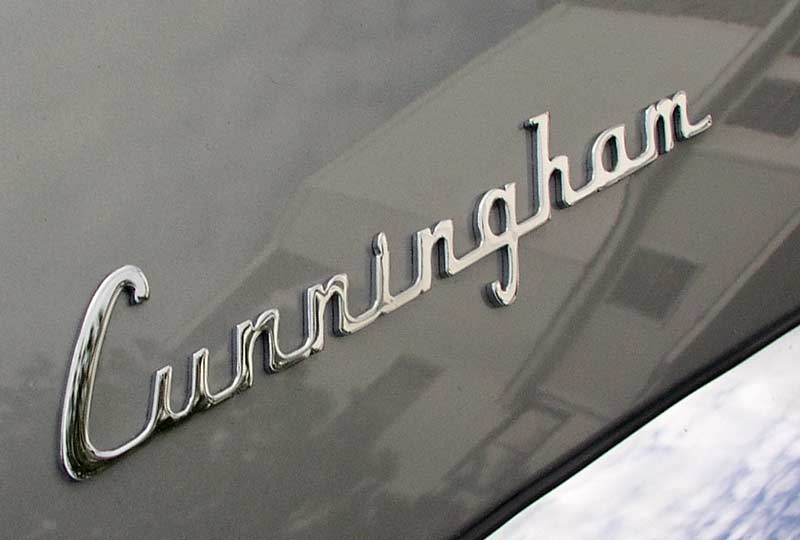
Above: Same Maserati reflected in the Cunningham C3 Vignale Coupe
We started the day with another great breakfast in the Mirror Lake Lodge dining room. We had heard that the road to the top of Whiteface Mountain was closed and that we’d be starting the days rallying from the bottom. We packed up our bags and hit the road, with me driving the short transit stage to Whiteface.
We were pleasantly surprised to find the road open and we drove to the top!
Above: Scenes from the top of Whiteface… including push-starting the Michie 330GT, which had stalled.
Below: Parked for a rolling start!
We had some time to soak in the view before the start of the rally. I wandered around shooting photos and latter walked down the tunnel to the summit elevator, rode it up and shot some scenery.
Above: The road up Whiteface Mountain
Above: Looking down the tunnel towards the opening from the elevator.
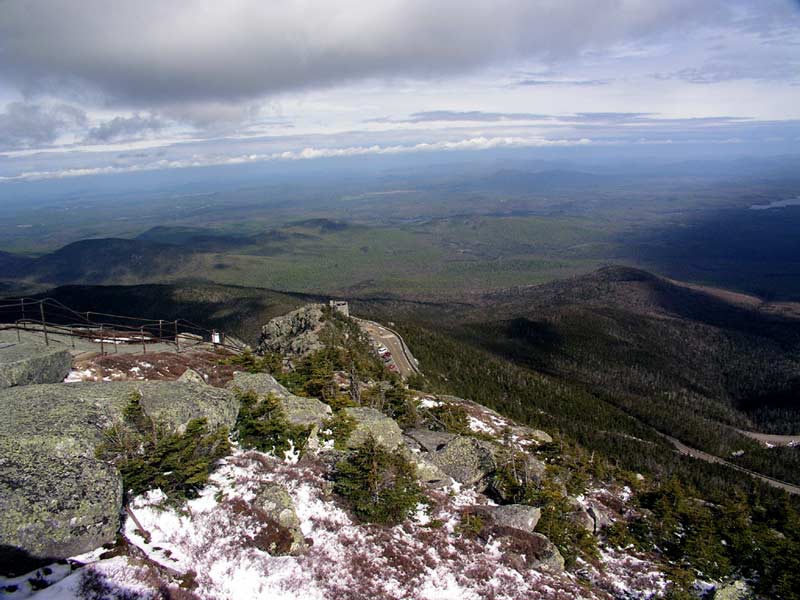
Above: Looking towards Lake Placid
Above: Looking down at the start and road from the summit
I came back down a several cars into the start. Cars go off at one minute intervals. We were parked way back up the line so it would be a while before our turn. Meanwhile, I shot photos:
Above: Can you tell I REALLY like this car? It photographs so well!
Joe & Marge Costa’s Series 3 E-type Jaguar. You can’t see Joe & Marge in this photograph, but I can bet they are smiling. They had grins like Cheshire cats all week. 😀
I even took photos after I got back into the car!
Above: Geri looking serious at the check-out/start line.
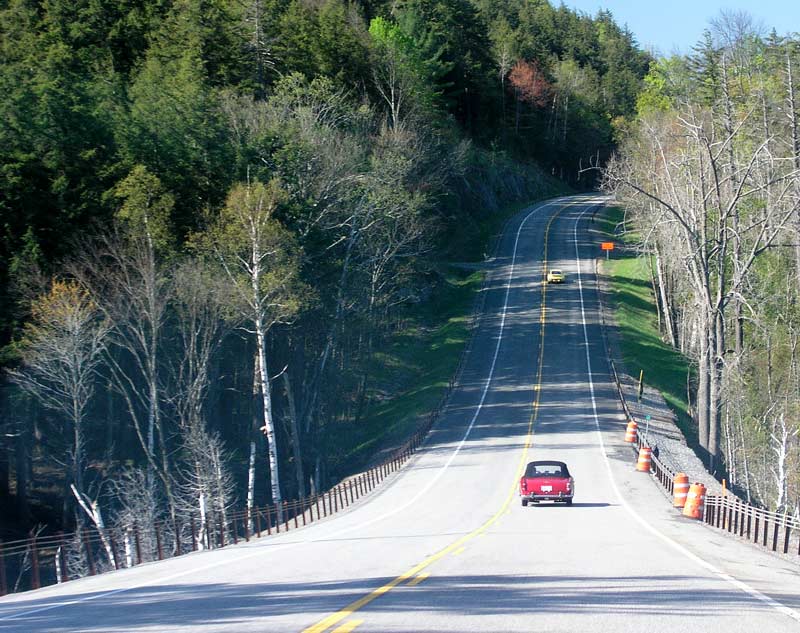
We received our check-out time, and I drove this segment while Dad performed the navigation duties. It was a pleasant drive down the mountain, then along a wonderfully deserted, and suitably twisty backroad going mostly north out of the Adirondack mountains. From there the route lazily made its way along a mixture of state highways and complete back roads north and east to the shores of Lake Champlain, then due north to the bridge to Vermont, just shy of the Canadian border. Along the latter portion of this route we encountered several police employed in speed patrols, and even saw some rally participants engaged in intimate discussions with said police officers. Thankfully we had our detector and it provided us with plenty of warning. So much so that another rally participant who was following us asked about what brand we used.
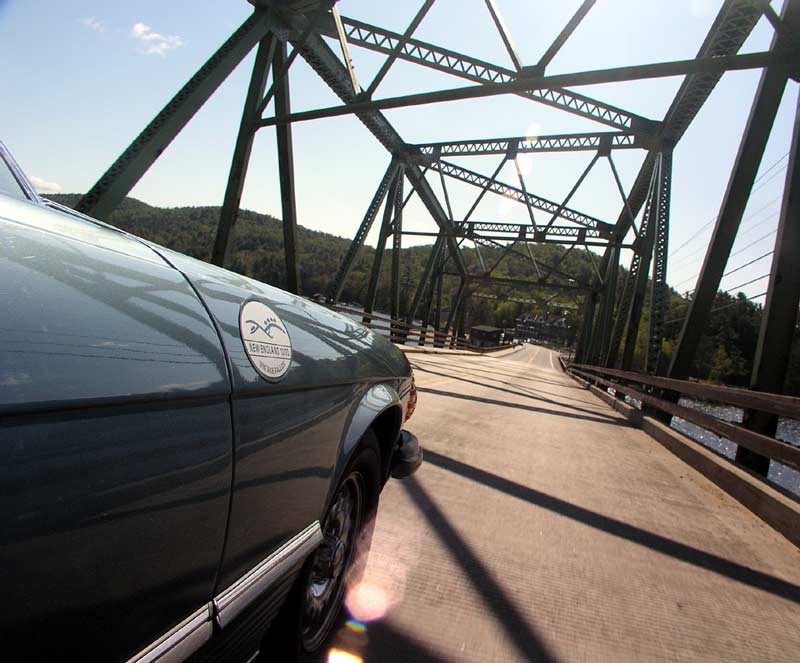
The checkpoint for this segment was located on an island on the Vermont side of the bridge. We arrived at the stand-off point with plenty of time to spare. It was a mildly tricky checkpoint run with a long, u-turn 1/3rd of the way in. Dad checked our clock while I snapped some photos.
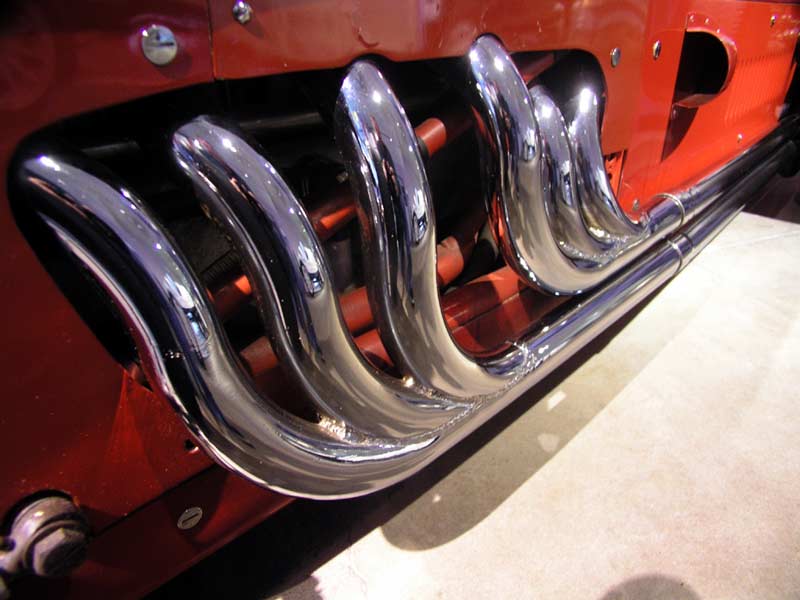
Above: The exhaust tip of the Fischer’s Porsche 356.
David & Paula Fischer prepare for their segment checkpoint run at the stand-off. They were concentrating so much on the task they had no idea I was there!
Sure enough, our clock is off the rally master’s by quite a bit, a full second and a half. We calibrate our timing to adjust and go over in our heads how we’re going to get it right. Confident in our planning we switch drivers and dad nails it on the zero. We grab a check-out time and run the next segment. It follows the string of islands down the center of Lake Champlain, through wonderful Vermont countryside.
To our delight, and for the second time on a New England 1000 that we can recall, we encounter a string of pre-war Bentleys going the other direction!
Above: A pre-war Bentley and a 70s Jaguar pass each other in Vermont.
The route left the islands and navigation got tricky, so other than ogling the occasional Bentley, I was too busy for photography. That changed when we went up and over Smugglers Notch on our way to Stowe, and the check-in. Navigation was minimal-to-non-existent (no other road but this one!) and the terrain interesting. I shot photos on the way up…
…and switched my Olympus digital camera to “movie mode” for the trip down:
It looks and sounds like we were going real fast. In reality we’re going the speed limit – that’s just wind noise and what your tires sound like when you hang your ear a few feet away from them on really twisty roads. Think of driving around a parking garage and that sound will be familiar.
I wish I could have held the camera a bit more steady. I really need an eyeball on the end of my fingers.
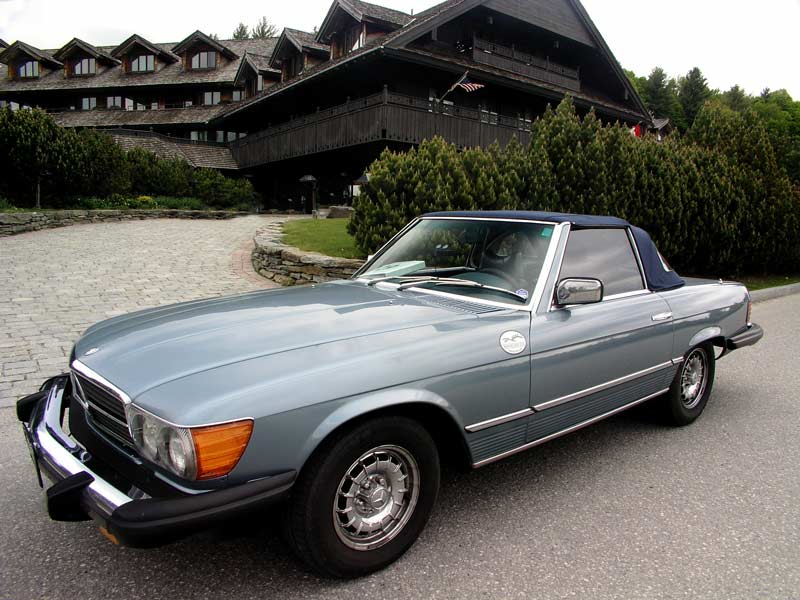
The checkpoint was in the front of the Trapp family lodge. Yes, that Trapp family.
Above: A few dead bugs on the nose of a 911.
Above: The Costa’s in their Jag wait their turn at the stand-off.
The checkpoint was in the parking lot and had a ludicrously short run. Oddly, or clocks were in sync with the rally checkpoint this time, so no compensation had to be calculated. We zeroed and happily went inside for lunch, after parking our SL next to the 300. There was also a 230sl on the rally but I never managed to get all three in a shot together.
Lunch was great, as is the view from the dining room. The lodge is filled with family memorabilia and would make a nice pace to stay for the rally (something my father communicated to the Rally organizers. The Bentley group was staying there too.)
After lunch I drove the next segment, which wound its way south through rural Vermont to somewhere near Woodstock. We zeroed that checkpoint too, and I also drove the short transit stage back to the hotel. Just outside Woodstock, literally a mile or so from the hotel we were caught in a construction delay that went on for ever. Clouds appeared and we just barely raised the convertible top before it transformed into a deluge!
We enjoyed a dinner at a restaurant (ironically) named “Bentley’s” and collapsed into bed quite exhausted from a long day of rallying. Thursday will be our last day of the rally.
Mostly sunny, pretty good performance, and fun roads.
We zeroed the first segment, and racked up 1 penalty point in the second (we were actually dead-on, but the rallymaster’s clock was half a second slow. =\), then we visited an awesome car museum, almost missed the start of the next segment toubleshooting a non-existent fuel leak, and finally nailed/zeroed a VERY difficult segment that caught most of the rally off.
The rally started from the front of the hotel overlooking Mirror Lake. It had rained on and off most of the night, and the distant mountains wore a fresh dusting of snow, but the sky was mostly sunny and the weather pleasant and cool. I slept a little late, still being on Pacific Daylight Time, and some cars were starting while I was still at breakfast. I brought the camera (fresh batteries!) with me and grabbed some shots after I ate.
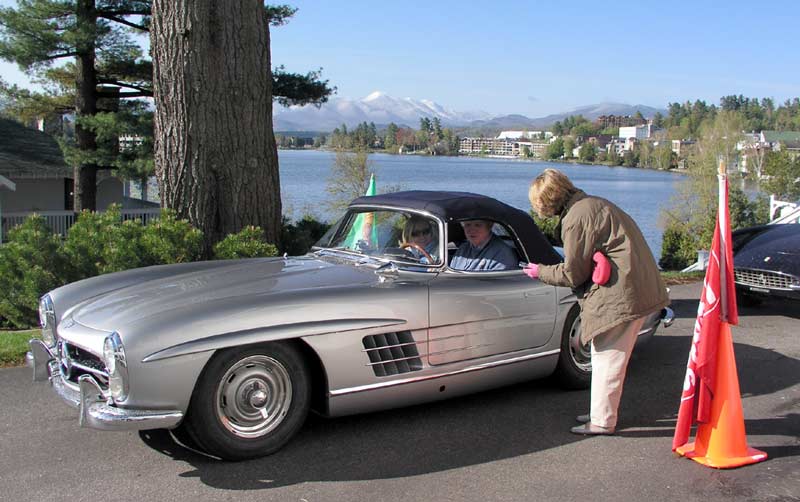
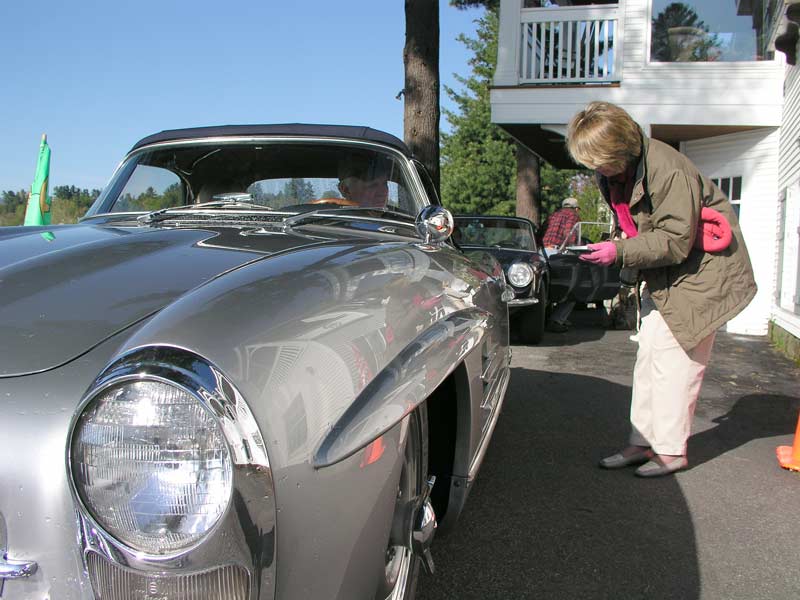
Above: Two views of Joe Hayes’ gorgeous 300sl at the start. Love that car!
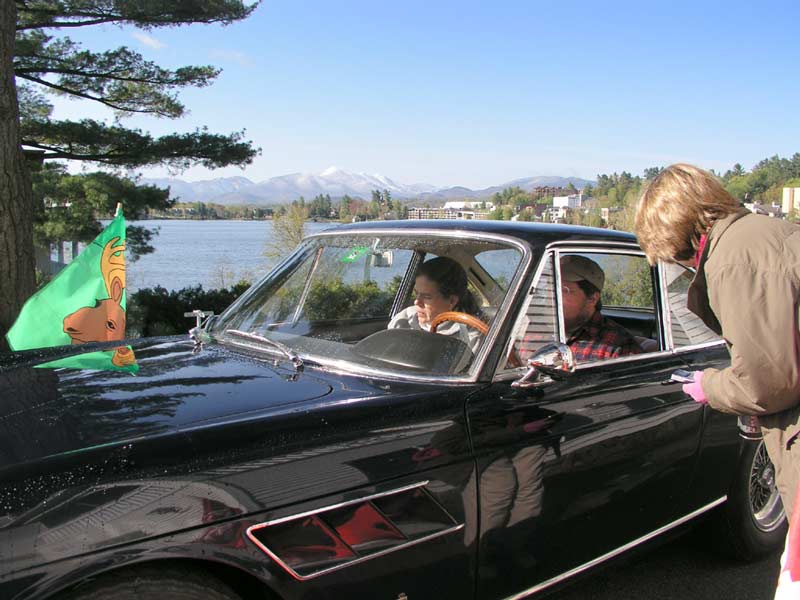
Above: Henry Michie’s deep blue Ferrari 330GT. His starter didn’t work and everybody gave him grief all week about pushing/bump starting his car. Henry has a great sense of humor and suffered all our ribbing with aplomb.
I got myself ready and went down to get our car ready for the day. The green Maserati Ghibli parked a few cars down had a dead battery and wound not start. I pulled the 450sl along side and the rally mechanics and my dad hooked up the jumper cables. I recorded the event:
That’s me, helping the driver sort out what lights (the parking lights) were responsible.
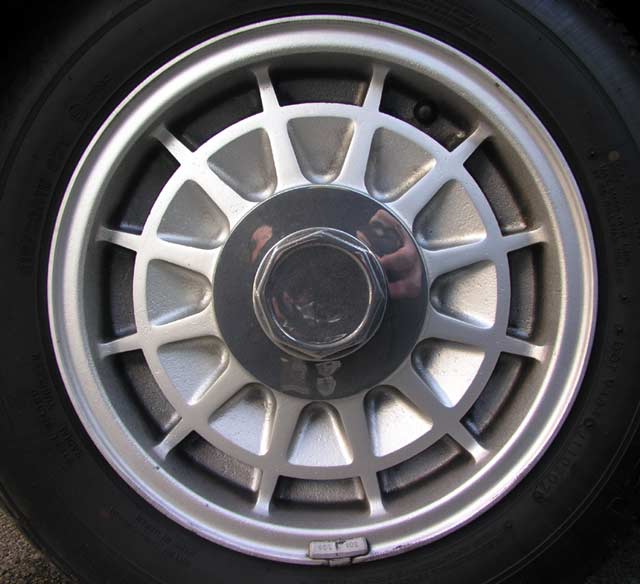
This Maserati was being driven by a father/daughter team. Always nice to see parents and kids (like us!) enjoying these events together. I love the wheels on this car… they capture that 70s Zeitgeist so well!
We pulled the MundaneSL around to front and got our checkout time, then hit the road.
The first segment was very easy for the navigator (me) and I assume fun for the driver, as it was long stretches of wonderful, rolling two-lane roads through the Adirondack Mountains. There were a few representatives of the New York State Police out there and we heard quite a few rallyists were waylaid and assessed various infractions and fines… thankfully none of them ran into us. We just had nice open roads and nice lakes and hills (I hesitate to call these “mountains”) to look at. The only trouble along this segment was a strong smell of gasoline we kept getting when we opened the windows. At first we thought it might be from the Ferrari in front of us for a while, but even after it was gone we could still smell it.
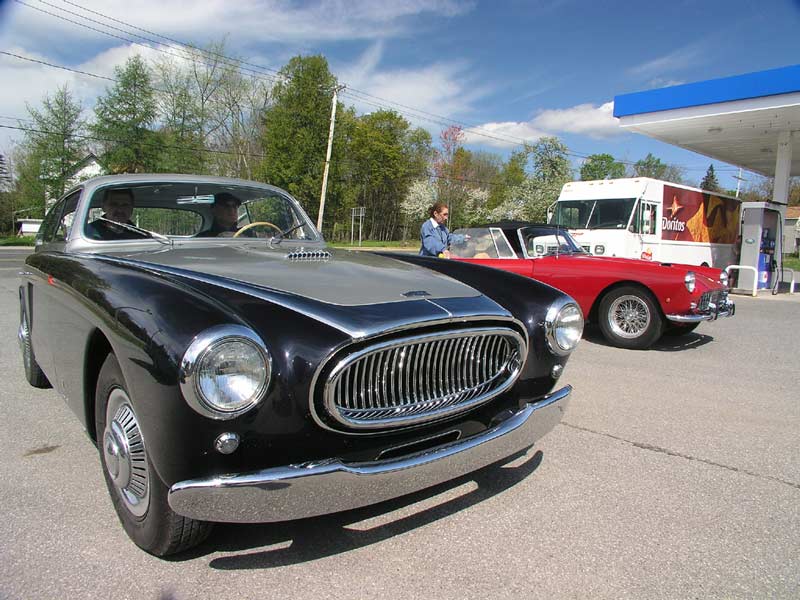
Minimal navigation and otherwise enjoyable driving brought us to the first segment checkpoint, located behind a gas station. We arrived with enough time to hang out in the stand-off area while I shot some photos.
Above: Miles Collier’s “resto-mod” Cunningham C3 Vignale Continental Coupe alongside Jaime Muldoon’s Ferrari 250.
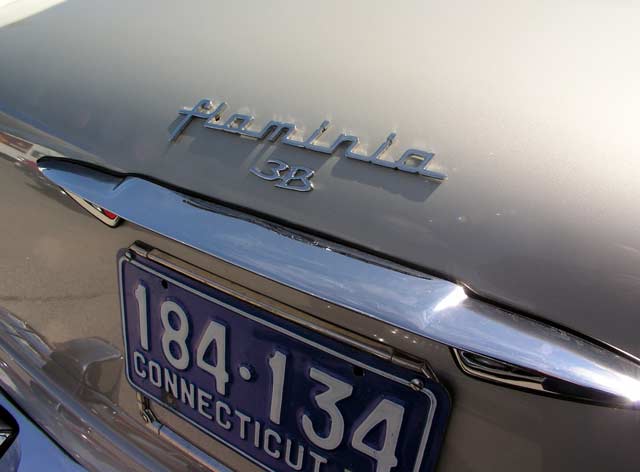
Above: The answer to the question from the other day about what was in the reflection, a Lancia Flaminia 3B coupe
Another view of the 250 and the Muldoons
Above: All work and all play, Mick Pallardy from Porsche has some smiles on the job.
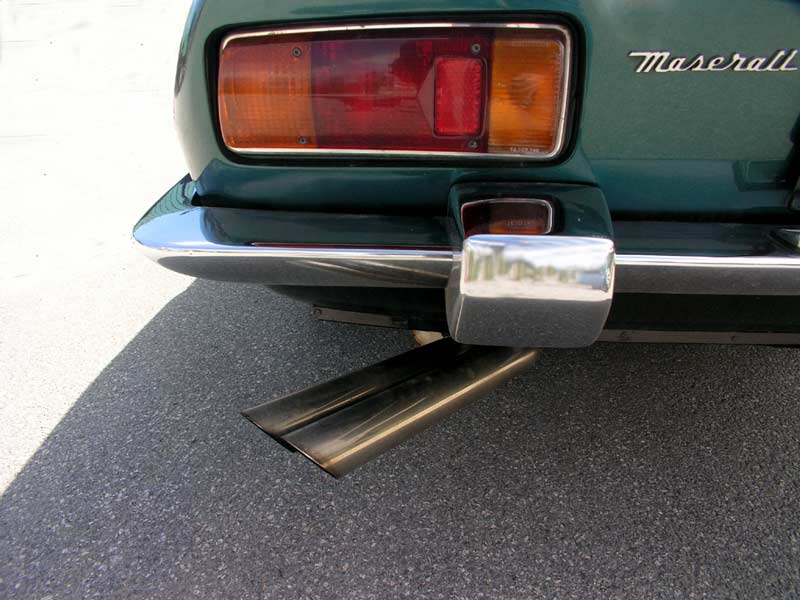
Above: Gideon’s Trumpet protruding from the posterior of a Maserati.
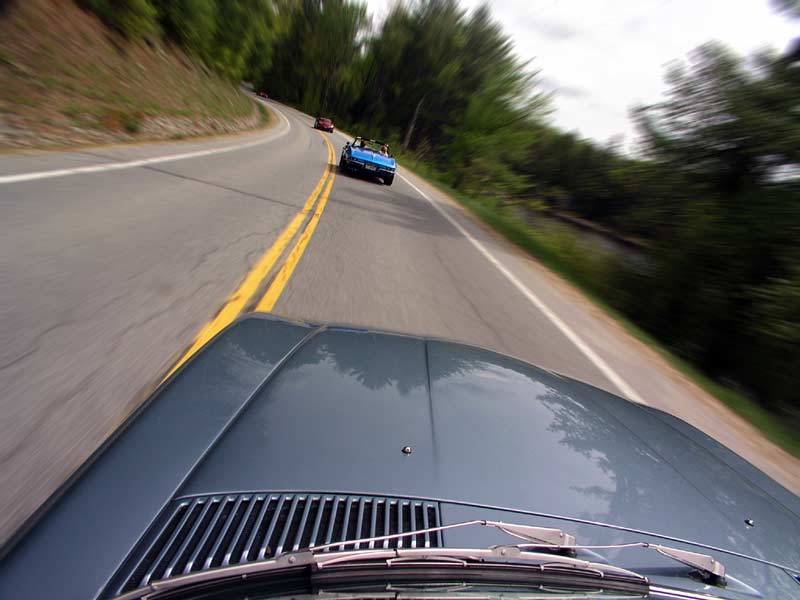
We zeroed the leg, dropped the convertible top, swapped seats, and I drove the next segment. It was very similar to the first segment, at least at the beginning, with enjoyable back road highways but eventually we left the hills and arrived near the town of Saratoga Springs where roads started getting crowded. Oh well. I did manage to grab one good shot out the driver’s side of the top as we had fun on the first part:
Additionally it seemed we had lost some gasoline and now figured we had a leak somewhere. We stopped in mid-segment (rare on a timed leg, but we had banked time) to fill up the car as we feared running out. I gave the area under the car and under the hood a good look over, but could not find any leaks. The strong smell seemed to have faded but was still there. It seemingly only came on with hard acceleration, but no amount of throttle blipping with my head under the bonnet could locate any leaks.
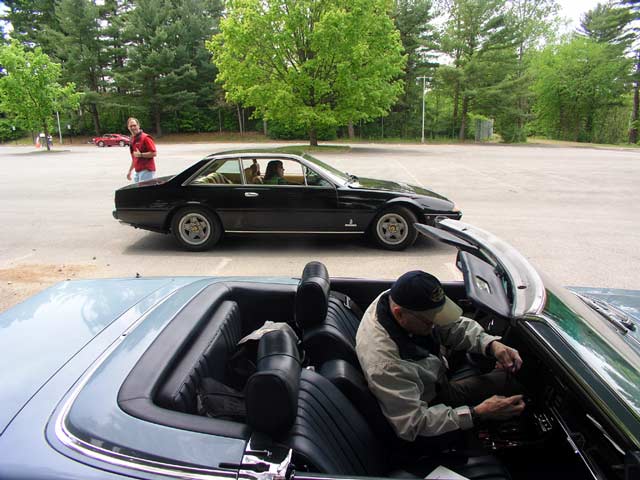
The checkpoint was at the Saratoga Car Museum, and as per his desire, dad drove the last part of the segment through the checkpoint. I snapped a photo of him preparing for that run in the museum parking lot. You can see the final checkpoint in the background.
The one thing we didn’t do, which is even allowed in these rally’s rules, is to wander over to the checkpoint and check our clock against the official rally time. Big mistake. We proceeded through the checkpoint, nailing it according to our clock, but in fact were half a second early by Official Rally Time. Grrrrrr! The rules don’t take half-seconds into account, so we were penalized a full second. Oh well. In order for us to win now everyone else will have to screw up more than us. 😉
The museum itself was nice, with an interesting collection of cars. I took plenty of photos but I’m hoarding them for future “car photo of the day” posts where my readers guess the car in the photo. I will share this one image however, as it is very cool:
Anyone know what car this is from?
We ambled back to the parking lot and since the rally mechanics were there attending to Henry Michie’s starter problems we engaged them in looking for our suspected gas leak.
No leak was found… but at the last fill up dad did notice that the gas cap was loose. Oddly enough that seems to be the cause of the “leak” or at least the smell of gasoline… go figure.
Anyway, I love seeing oddball cars at events like this. Besides, if I see another red Ferrari I think I’ll fall puke. There were no less than a half-dozen red Ferraris in the rally, ranging from the 250, through 275 GTBs, 330s, to Daytonas, and a gaggle of newer models I can’t keep track of nomenclature for (their all on the depreciation curve anyway…) I’d rather see Allantes, Morgans, Maseratis, Mercedes, Jaguars, etc. Red Ferraris are OK but too much is too much. Vintage sports car events are sick with red Ferraris like small town show & shines are sick with Camaros & Mustangs. No disrespect to red Ferrari (or Camaro/Stang) owners, just my opinion.
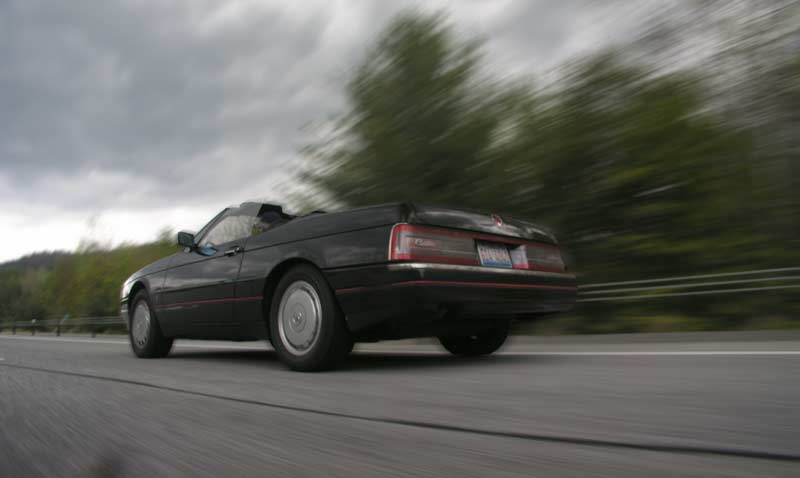
Anyway, on the last leg I snapped an epic shot of the Allante:
Dad drove the last leg of the day, from Saratoga back up to Lake Placid, though along a mostly different route. While leaving Saratoga we encountered a traffic jam of sorts, and Dad went off-course (against my expressed desire) but he was able to just sidestep the delay by a few blocks and get us back on course and moving again. I was more concerned with odometer drift, but in the end he was proven right. Even with the detour, we barely made the checkpoint, arriving at the stand-off area with less than a minute to spare before our check-in time. Good thing Dad did NOT listen to me as most competitors racked up big penalties on this section, whereas we zeroed it.
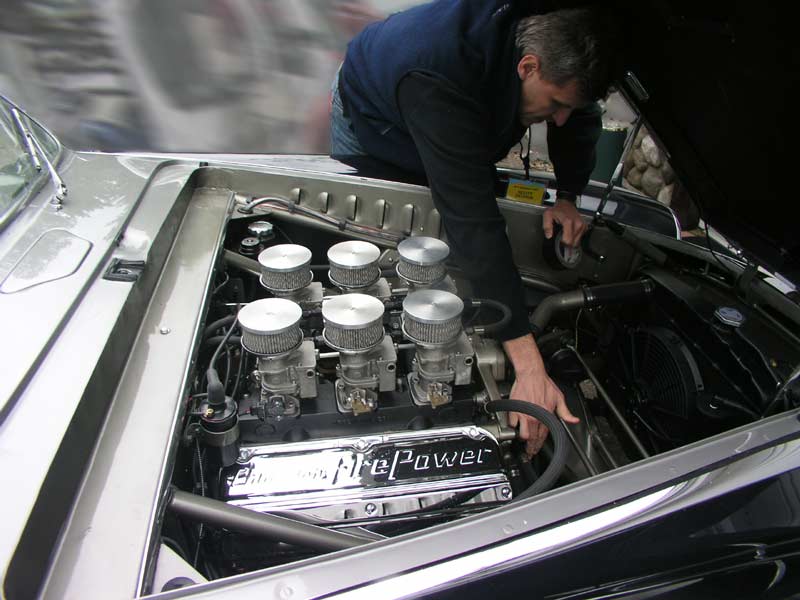
From the checkpoint to the hotel was a 15 minute drive. There was a boat ride scheduled but we chose to skip it and get a nap. I also wandered around and shot some photos, including some of Scott George caring for the Cunningham C3.
Dinner was fantastic. I can’t recall the name of the place, but I remember that the line for the shuttle was long so Dad & I chose to drive. We were followed by Joe & Marge Costa in their 1973 V-12 E-type 2+2. While we waited for the rest of the group to arrive we sat at the bar and had a great conversation. Joe & Marge were obviously having a great time, as they had huge smiles plastered on their faces all week.
At dinner we were told that our start atop Whiteface Mountain was in doubt due to weather, but we were optimistically looking forward to another great day of rallying.