Finally updating my reading list.

I’m a compulsive reader. My whole life I’ve rarely let much time go by without some book as my constant companion. I try to keep my website here in sync with what I’m reading, but I’ve failed miserably over the last year. I think two books were listed the whole year, while I likely plowed through 4x that number. Right now it still lists “Fiasco“… which was an excellent read. I’ve been through a couple of other books since – I just forgot to update my site here. So in penance, here are a few mini-reviews of stuff I’ve read of late. I will update the site soon with the book I am *actually* reading at the moment.

One of the most profound books I read this past year was “A Nation Of Enemies” about Chile under Pinochet. I have a partially written essay about it stashed away in my “drafts” database, so you’ll have to wait for that.

The Looming Tower” is a fascinating read concerning just about everything we know about Al Qaeda, right up to 9/11. It’s origins in Eqyptian Islamic thought, the principle players, their lives, their philosophies, their methodologies, etc. Right alongside that is a study of the intelligence community, specifically the CIA & FBI, and their continual stumbling over each other due to their basic, fundamental differences of philosophy. The CIA (subject of the book I’m reading now) had always been externally facing and saw the world as a whole, and understood how US Law was irrelevant in many respects in remote places of the world. I may or may not agree with that stance, but the book does detail how the CIA solution to Al Qaeda was to just kill it’s leadership. This was attempted a few times under the Clinton administration, but did not succeed. It was stopped on all but one occasion by the FBI, whose “law & order” mentality conflicted deeply with the CIA’s “kill ’em” plan of action. The FBI wanted to prosecute and punish, which of course requires evidence, due process, etc. They created elaborate schemes to capture bin Laden and extradite him to stand trial for the embassy bombings and the USS Cole. The delays, along with an administration change lead to neither happening. The events of September 11, 2001 therefore were not really a surprise to those in the intelligence community. They knew who it was, why, and in a lot of ways what and when it was going to happen. In hindsight perhaps the CIA’s option would have been a lot more effective and less expensive, but then again we would have been enjoying another decade of peace and prosperity had they did what the CIA suggested.

That leads us to “Fiasco”. To those that feel that the Bush Administration was a united front concerning Iraq, this book contrasts that sharply. On the one side you have the Department of Defense (Rumsfeld, Wolfowitz, et. al.) + Cheney, forging ahead with rosy projections – minimal troop commitments, self-funding effort through oil revenues, “They’ll greet us as liberators!” and PowerPoint based sales pitches. On the other hand you have the State Department asking tough questions … and getting no answers… from anyone. The Military of course does what the American military does best, Logistics… all the while ignoring Strategy, Intelligence, Counterinsurgency, post-war infrastructure, sealing the borders, not to mention exit strategies. They assumed the State Department had all that stuff worked out. What resulted was of course, a Fiasco. A fascinating read, I highly recommend it.

I’ve also read the classic text “This Kind of War” by T. R. Fehrenbach, which covers the Korean War. Fehrenbach is a blunt, plain spoken man with a keen awareness of Military History. Korea is a largely forgotten conflict but it set the precedent for post-atomic ground wars, both politically and militarily. An excellent read though do not expect a coolly detached historian’s view. An interesting aspect of reading this book for me is firing up Google Earth and having a look at the actual terrain being described. I wholeheartedly suggest anyone reading a book about any sort of military conflict do this simple thing. Terrain is a significant part of how battle is played out, and seeing the relief (Korea is an exceptionally hilly place) truly puts a lot in perspective. The simplistic map in the book of “The Gauntlet” run by the 2nd Division on the Sunch’on – Kunu-ri Road, November 30th 1950 is what lead me to look at the actual terrain. From that moment I was hooked.

At the moment I’m reading my Xmas gift from John Welch (Thanks John!), I’ll try to summarize it once I’m done.

Pay No Attention To The Man Behind The Curtain!

The server that hosts a lot of my images is down. It is my own personal box, which is almost as “vintage” as the cars it displays. It is a wonder that it works at all to be honest… clean living in a clean room I guess.

It had a minor disk issue earlier this morning and I’ve fixed it, but now I’m making a backup before I bring it back online. “Have patients!” …said the Mad Doctor! 😉

Update: OK, as of 11:45 Pacific Standard Time the image server is back online.

“The Future may look something like the 20th century in reverse.”

“The future may look something like the 20th century in reverse. The unfree nations will grow so quickly that they will overwhelm free nations with their economic might.”

That quote is from Kevin Hassett, director of economic policy studies at the American Enterprise Institute. Just one of the many very interesting tidbits found in this article.

Well worth the read. The article (by Rowan Callick) raises many questions about how Free-Market Capitalism is coexisting with repressive government in China, in direct opposition to western enlightenment and the Hume/Smith governmental philosophy and economic theory.It should not work, but somehow it is. Is this due to cultural differences? It also explores the extension of “soft power” over the globe and the influence it has (far GREATER than “hard power” … a lesson our current leaders have somehow either forgotten or never learned!) Probably the most interesting thing I have read in a while.

I have my own thoughts about this subject, but I’m interested in hearing yours… if you have them.

Another Registry!

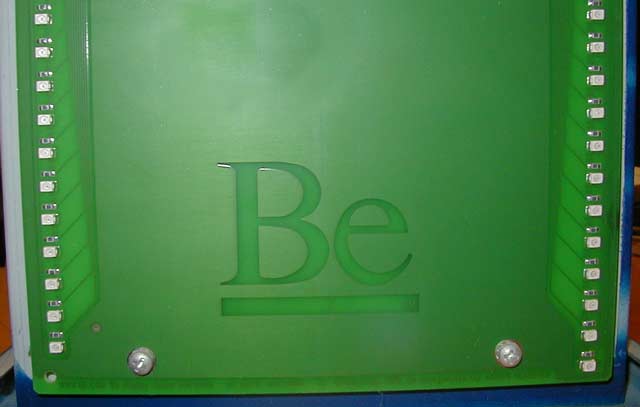
BeBox!

To add one of my obscure bits of hardware to: The BeBox Registry.

I literally stumbled upon this site this morning, as I was considering putting the old box up on eBay or something. You see I have a rather vast collection of odd computer hardware stashed away in a few places. Mostly Non-Intel CPU workstations and servers. One of these is a BeBox. About 1800 of these were built and I managed to snag one from a friend of mine about 8 years ago (Hi Jeff!)

Then I came to my senses… I can’t put this on eBay. What I have is a collection of obscure, high-end systems from the 90s. These are the last gasp of non-Intel driven errata before that branch of computing lost its momentum. I have PPC, Motorola 68K, Sun Sparc, MIPS and Alpha boxes. I imagine if you liken the pre-PC era like the Brass Era of automobiles, these machines are like the explosion of brands pre-WW2. I have the computing equivalent of Auburns, Cords, Dusenbergs, REOs, Pierce-Arrows and the like. Names like Be, NeXT, SGI, Sun, and of course Apple. They are like used cars now, like those REOs in the 40s; old cars from failed, or merged into some larger entity companies, whose usefulness is gone and whose parts are unavailable. They have little value now, but it should grow over time. I even have a few “one of a kind” machines – unshipped prototypes.

So no eBay. Instead I’ll catalog them here over time. (You’ll note I created a new category for this subject .) Should be fun.

C’mon Apple… keep it coming.

A small step for apple...

OK, so maybe somebody at Apple has a clue or knows how to listen. They announced a new rev of the Xserve today. I won’t bother to talk about the stuff everyone focusses on (CPU horsepower and whatnot, I have friends and customers you can turn to in order to get the skinny on what’s happening inside the new box. ) I’ll stick to the subject of all my usual rantings about servers and server design, the case. This is because I don’t manage servers, as in “what goes on inside the server” I manage Datacenters, namely what happens OUTSIDE the server once it is racked and operating.

The momentous cause of my small celebration today? Apple put a USB port on the FRONT of the Xserve. Whoo hoo!

Mind you this is only a very small step away from ‘style” and towards “substance”, and ironically “usability” but it IS progress and I have to give Apple credit for that.

As I have said before, to be truly useful in the environments it was designed for the Xserve should have all “user” ports on the front, namely USB, and Video, and all “system” ports on the back, namely power, network, FibreChannel, etc. If it connects to another system or the datacenter infrastructure, it goes on the back. If it interacts with a user, it goes on the front.

Datacenters are laid out in hot aisles and cold aisles, where the hot back sides of servers are isolated from the cold intake side. This allows for optimum cooling and airflow. In ideal datacenter environments the hot aisles will be contained and the heat given a specific path for removal. If users have to constantly have access to the back side of racks (or more accurately the hot aisles) then they can not be easily contained. Putting user-required ports on the back side of servers is counter-productive.

Of course, that isn’t my biggest complaint about the Xserve’s design. That remains the completely absurd overall length of the box, which still lays out to 30″ (76.2cm) which is so long that it completely obliterates and density advantage a 1U server supposedly buys you.

I know I’ll get video ports on the front panel long before Apple pulls their head out their butts on case length of 1U boxes though.

Thanks guys.

My Xmas Gift

Along with the analog-to-digital theme of the past few days, I received a USB turntable for Xmas. I’ve brought a box (one of many!) of old LPs to work and I’m running the conversion process in the background while I work. It is such a joy to hear all these old, obscure albums again! So far I’ve focussed primarily, and quite ironically, on my vast collection of early electronica. Very old Tangerine Dream and Jean-Michel Jarre LPs.

Today I am finally hearing all of The Concerts In China again! It is as amazing as I recall. It is like I’m back in 1982.

In the height of the Napster craze I was able to snag a few tracks, and since then I’ve (re)purchased a few of JMJ’s albums off the iTunes Music Store… but TCIC and Rendez-Vous, two of my favorites have yet to be released there. (Obscure Chuck Fact: I traveled to Houston specifically to experience the “Rendez-Vous” concert… along with 1.5 million other people… to this day my parents thought it was to visit them… if they only knew. 😉 )

I’m listening as I capture, and right now is the sublime “Fishing Junks at Sunset”… I’m in heaven.