Datacenter Site Selection – Facebook in Prineville, Oregon

Average Industrial Power Rates per State

Facebook announced this week that they are building a datacenter in Prineville, Oregon.

Other than being the place of my wife’s birth, and the home of Les Schwab Tire Centers, why on earth would they choose to locate a high-tech industrial facility in Prineville, a tiny town in eastern Oregon far from any major metropolitan area? The reasons are simple, and boil down to two things: Cost of Electricity, and Climate.

Have a look at the map above. This represents the average cost of power to an industrial user on a per-state basis. I’ve said it many times, but it bears repeating: A datacenter is essentially a facility that transforms electricity into bits. Power goes in, bits come out. The by-product of this bit manufacturing process is heat. So power costs, and the ability to keep the facility cool are the two critical components of datacenter site selection. Those white states running through the map represent the lowest power costs.

While the cost to build a datacenter is staggering (~$2000 per square foot) the cost to operate it over time is daunting. Datacenters use a lot of electricity. Not just for powering the servers, but also to keep the environmental conditions correct for those servers. Computers don’t react well to dramatic changes in temperature and humidity, so a stable environment is critical. It takes as much, and often more power to maintain the datacenter environmental conditions as it does to power the servers. Locating the datacenter in a place with a naturally cool climate is a huge advantage due to the concept of “free cooling”… that is using naturally cool outside air to maintain the inside temps. We do this at digital.forest’s datacenter in Seattle. Outside air is used the majority of the time, year round. Only in daytimes during the summer do the mechanical cooling systems have to kick in and take over. You can’t do this in Houston, or even in most of California. So look at those white states and think about which ones have the reliably coolest climates.

Washington & Oregon.

Washington state has an advantage over Oregon in that power is less expensive here. Visionary companies started building datacenters near the large hydroelectric dams along the Columbia River about seven years ago. Microsoft and Yahoo near Quincy, VMware and T-mobile near Wenatchee. More were planned until our Attorney General, Rob McKenna declared that datacenters were not classified as “Manufacturing Facilities” and therefore not eligible for sales tax breaks on capital purchases tied to their construction. Given that it costs tens to hundreds of millions of dollars to build a datacenter, this action tipped the scales into Oregon’s favor. Even though the long term operating costs in Oregon may be slightly higher, the cost to build a facility is much, much lower as Oregon has no sales tax. This is likely why Facebook chose Oregon.

Construction will last for quite a while and inject $188 million dollars into the Oregon economy. Once in operation the facility will bring about 35 well-paying jobs (Facebook says 150% of the region’s prevailing wage) to the town of Prineville. For rural areas this can only be a good thing. So congrats to Facebook and Prineville, and let’s hope it is a long a fruitful relationship.

Datacenters are a growth industry of the future and will be a wonderful economic boost for rural communities east of the Cascades where traditional industries such as timber have all but vanished. I hope our politicians in Olympia have noted this and can get datacenter construction rolling again here in Washington.
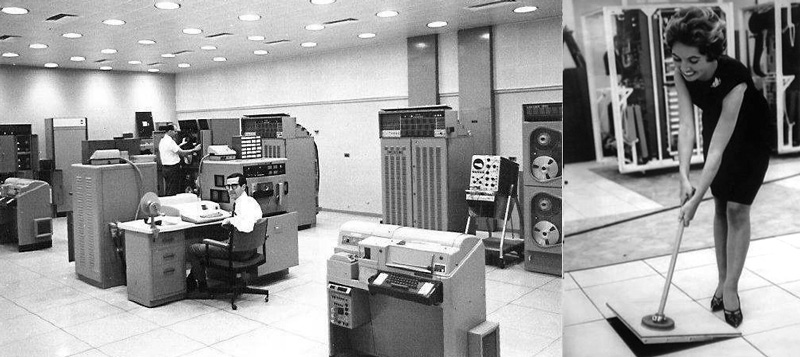
Realization of an Anachronism: Raised Floor – Requiescat in Pace

This morning I noted, via Rich Miller’s twitter stream a new article counter-proclaiming the death of Raised Floor in datacenters. It boggles my mind how people still cling to this outdated, outmoded, and clearly obsolescent technology. I’ve ranted about this before two and a half years ago. Nothing has changed in those two and a half years other than raised floor being that much more obsolete.

Put your racks on slabs guys. It’s liberating.

Car Photo of the Day: The Bugatti in the Living Room

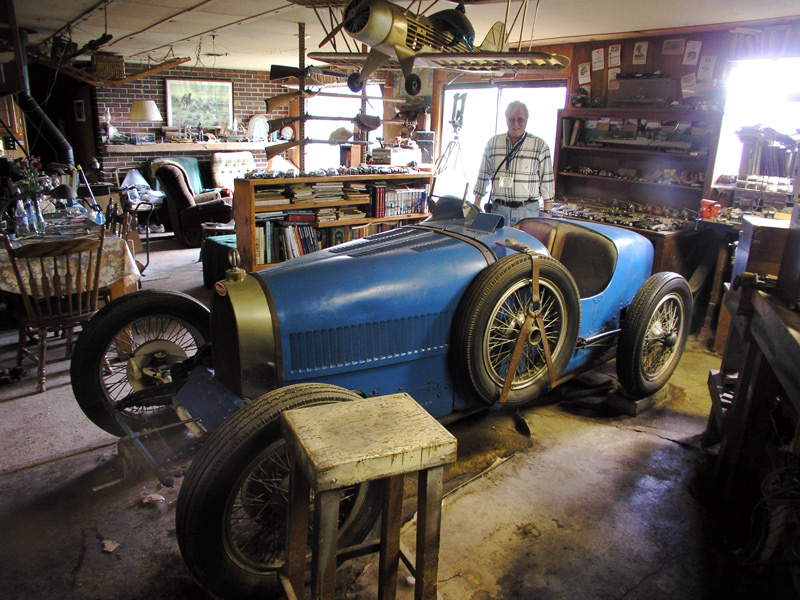
The Bugatti in the Living Room.

Inspired by the Bugatti Cententaire post on Phillipe Picavet’s blog today, especially the well-loved and smothered-in-patina pre-war Grand Prix Bug, I present the (in)famous “Bugatti in the Living Room” from Marrowstone Island, Washington. We visited the home of a noted car collector on Marrowstone as part of the 2008 Classic Motorcar Rally and he indeed does have a Bugatti parked in his living room. To say the least the man fits the term “eccentric” quite well. His home is literally built around his collection which includes many notable Jaguars and some amazing pre-war machinery.

Like the Bug that Phillipe presented, this one also can never be called “over-restored”. But unlike the car in Belgium, it does not get used as Ettore intended.

Car Photo of the Day: Red on Red

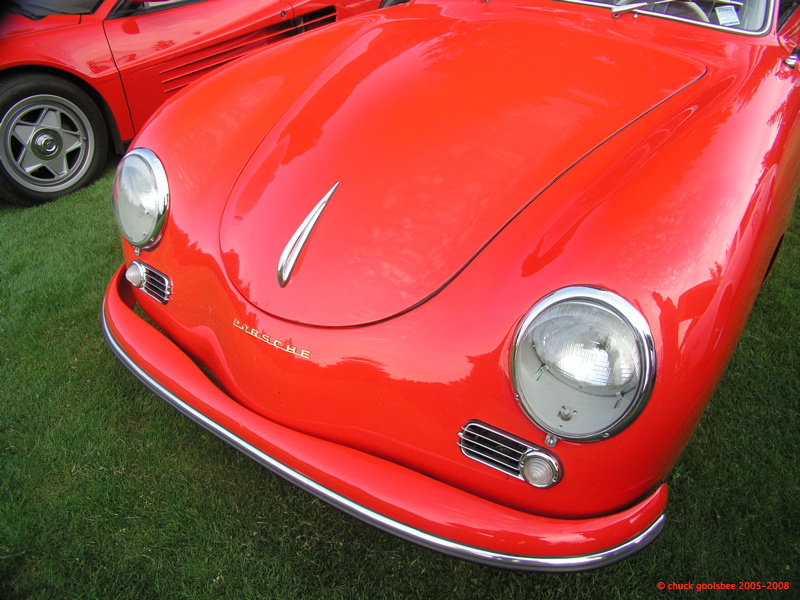
Red is one of those love/hate colors on cars. Often the red is applied much like lipstick on a pig, earning the epithet “Resale Red”.

Of course red is also the traditional color of Italian race cars, so it is (all too) often associated with exotica such as Ferrari. Proven here by the Testarossa in the background. I would much rather see Ferraris in other colors, and in fact the prettiest ones I have ever seen have always been something other than red. Of course the fact that despite a vast spectrum available, the vast majority of Ferraris ARE red makes choosing a beauty standing out among the sea of rosso corsa pretty easy.

If you’ll pardon the pun, my primary objection to red on cars is that the color is actually quite flat and rarely has any depth or subtlety. Compare two cars, one painted red, and the other say in a metallic maroon or silver, and the car will likely look SO much better in the latter colors. It is because of the primary color nature of flatness (shared with whites, non-glossy blacks, yellows, and blues) that makes for both the appeal, and the dislike of red on cars. To each his own I guess.

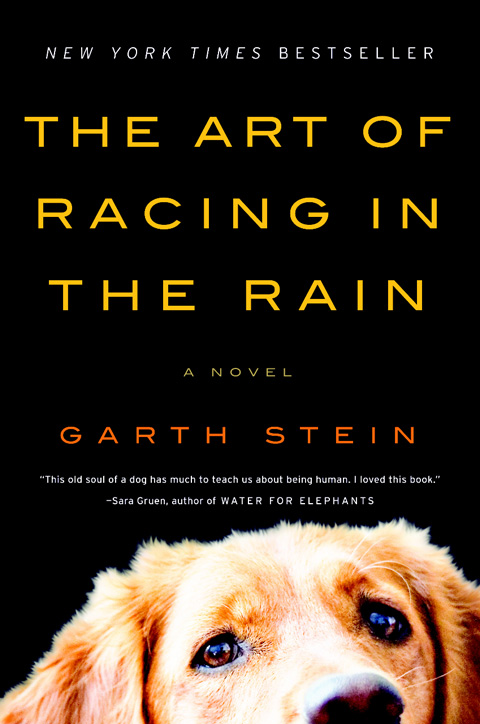
Book Review: The Art of Racing in the Rain, Garth Stein

When my boys were very young a near nightly ritual was for me to read to them. This occurred either on the living room couch, or at their bedside. We started with “kid books” such as Dr. Seuss’ One Fish, Two Fish, Red Fish, Blue Fish (Christopher’s first non-parental related word was “fish”) and culminated with reading long literary classics such as Tolkien’s Lord of the Rings over a period of months. One book I read between those, when Chris was maybe three or four was Crow and Weasel by Barry Lopez. One particular quote, spoken by the character “Badger” from that story has stuck in my head since that reading almost two decades ago:

The stories people tell have a way of taking care of them. If stories come to you, care for them. And learn to give them away where they are needed. Sometimes a person needs a story more than food to stay alive. That is why we put these stories in each other’s memory. This is how people care for themselves. One day you will be a good storytellers. Never forget these obligations.

There is so much truth to that bit of wisdom, since as human beings most of what we truly learn comes from what we hear, read, and are taught from others. For example, we take for granted the Thomas Jefferson’s authorship of the Declaration of Independence, and bonding of hydrogen and oxygen to make water, but how many of us have directly observed those facts? The ability to learn from secondary sources is in many ways what separates us from other species.

It is ironic then, that this particular story is told entirely from the perspective of a dog.

I’ve been aware of this book for a while, as it is has been endlessly pimped by the guys over at Cold Track Days, I just never bothered to pick it up as my reading tastes these days trend away from fiction. Sue on the other hand reads nothing but fiction, as her work-enforced reading is all facts, and all tragedy (she’s an attorney who works in cases where parental rights are being terminated.) She likes to read fiction and tears through books twice as fast as I do. I was surprised to find this one in her pile of completed books that she was returning to the friend she borrowed them from. I snagged it for myself and set aside the others I was reading to dive into it.

Well this is indeed a story to be given away when needed as Badger instructed Crow and Weasel. Filled with pathos, every character in the novel learns valuable lessons from life, and we learn right along with them. What I found refreshing was the specifically, and completely male perspective of the story, be it by man, or dog. Perhaps that is why I enjoyed the read so much more than Sue did.

But then, she doesn’t like to drive either.

It is an excellent, and well-told story, and plays out in a wonderful cinematic fashion, strictly however from the point of view of a mutt named Enzo. I’ve heard that it it being considered for a movie, but I can’t see how a visual re-telling will work from the canine perspective. We’ll see I guess. Certainly a challenge for a filmmaker!

The tale takes place right in my former hometown of Seattle, (in the mid 80s, until I met Sue and moved to Ballard I shared a house with two other guys in Mt. Baker near the old 1-90 Bridge) and so many of the places and names were as familiar and comfortable as an old pair of slippers. Leschi, the CD, Capitol Hill, downtown & Mercer Island. A wonderful scene takes place at Pacific Raceways in Kent, and is described by the narrating dog in such a perfect way to capture the essence of being at that track as a spectator. The contours and curves of the track described only as one hears it by exhaust note… very well done.

So if you’re a guy in need of a story more than food to stay alive, you might find this as enjoyable as I did. Give it a read (before Hollywood screws it up.)

www.goenzo.com