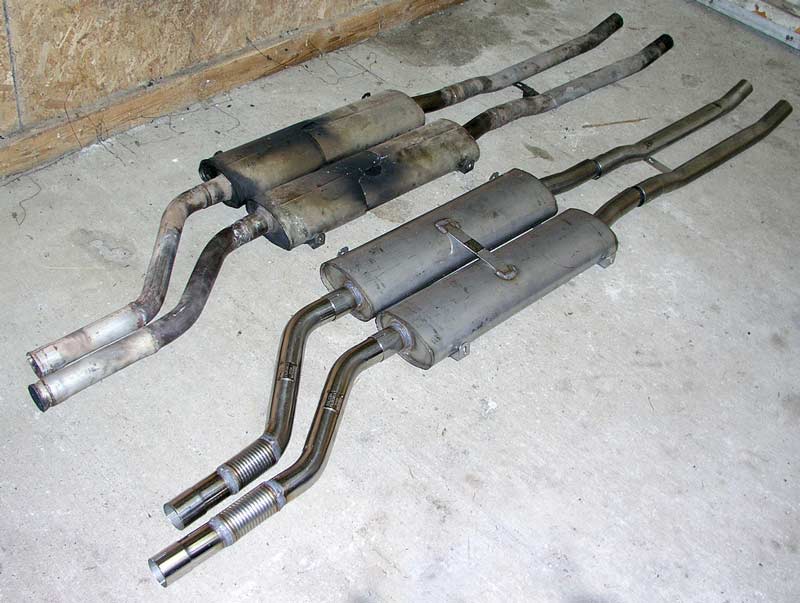
My new exhaust arrived this week! Above you can see the new parts laid out next to the old parts. I hope to put the new ones on the car later today.
If you recall the exhaust started making nasty noises last year on the GTTSR. We could see a crack on the driver’s side muffler, but the whole horror was revealed when I pulled the entire assembly off the car. This is a stainless steel exhaust system, and as such you would think it would last a lifetime. It was installed by Classic Jaguar 10 years ago. Being an exceedingly persistent guy, I sent an email to Dan Mooney to let him know the mufflers he sold my father had cracked…
Mr. Mooney,
The stainless steel exhaust system installed on my car by Classic Jaguar has failed in a catastrophic fashion. You can view the photos here:
http ://etc.goolsbee.org/jag/Exhaust/
Last time I had an issue (the engine, specifically the cylinder head), you absolved yourself from any warranty as I had brought the car to somebody else first. In this case nobody other than you & I know the condition of the exhaust system – so you’re getting the first pass. As you can see the mufflers are cracked half way through. Their interiors are seriously rusted and have disintegrated… perhaps these were on the car prior to being submerged and were never replaced?
So before I shop for a replacement system I wonder if Team CJ would stand behind their product & installation during restoration. Let me know.
–chuck goolsbee
65ots, 1E10715
arlington, wa, usa
Hey, I figured “what the hell”… I’ll keep offering the guy chances to redeem himself, after all… I’m an exceedingly persistent guy! Here is his reply:
Mr Goolsbee,
As a point of order, you are not now and have never been a customer of Classic Jaguar. To the best of my knowledge, you have never spent a single penny with Classic Jaguar. Furthermore, given your inaccurate, insulting and grossly misleading Internet rants about Classic Jaguar, I hardly feel inclined to assit [sic] you with any problems you may have with your car.
For the record, although I have no doubt you will misrepresent whatever I say on your website, your father only bought one exhaust system from Classic Jaguar and that was in the spring of 1997. It was not replaced when the car was rescued from the Houston flood in 2001. As to why it was not replaced at that time, I suggest you take that up with your father. Speaking of your father, please give him my sincere best regards.
On the positive side of things, at least the failed exhaust muffler will give you the opportunity of removing one more connection to myself or Classic Jaguar from your car – something which I understand is very important to you.
Best Regards,
Dan Mooney – Team CJ
danmooney@classicjaguar.com
www.classicjaguar.com

okay…. I don’t believe I’ve ever been “inaccurate, insulting and grossly misleading” in any of my statements about Classic Jaguar. If I have Dan, feel free to point them out and I’ll correct them gladly. Anyway, in terms of a vendor standing behind their products, which CJ claims to do, what I say in my little corner of the Internet should have nothing to do with any of this, right? So to try and get this conversation back on target I replied:
Dan,
In our last correspondence you indicated that what prevented you from considering upholding a warranty on your parts and workmanship was the fact that I had brought the car to another shop. Therefore, in this instance I figured I’d offer you first opportunity to stand behind your work and your product.
Let me know if you change your mind, as I’d like to have the car on the road again soon.
–chuck goolsbee
65ots, 1E10715
arlington, wa, usa
This conversation happened over a period of two days in early February. Want to venture a guess what I heard back?
Nada, Nuthin’, Zilch.
So whose statements are “inaccurate, insulting and grossly misleading”??
“Team CJ components are the highest quality, most thoroughly engineered performance upgrades available for your Jaguar. We have invested thousands of hours of research and real world testing to ensure that our components are safe, practical, durable and easy to install. Your satisfaction is 100% guaranteed. Such is the confidence that we have in our products, many Team CJ components are guaranteed for life!” “Team CJ header systems are beautifully made, superbly engineered components that will enhance both performance and the appearance of any Jaguar engine bay. Constructed of the finest quality 304 stainless steel, mandrel bent and hand finished for perfect fit, our header systems will last the lifetime of your car.” “These superb quality tuned headers have been developed entirely by Classic Jaguar. Any other stainless steel header system currently on the market is nothing more than expensive window dressing for your engine bay.” “Please do not confuse our exclusive Team CJ header system with some of the inferior products currently being peddled around the US market. By now you know our credentials – at Classic Jaguar we are building some of the finest E Types in the world and we install the parts we sell on a daily basis. The Team CJ header system is the best E Type header system on the market – otherwise we wouldn’t offer it.“
Let’s take a close look at what Classic Jaguar defines as the highest quality, most thoroughly engineered, durable, 100% satisfaction guaranteed, beautifully made, superbly engineered components that will last the lifetime of your car shall we…
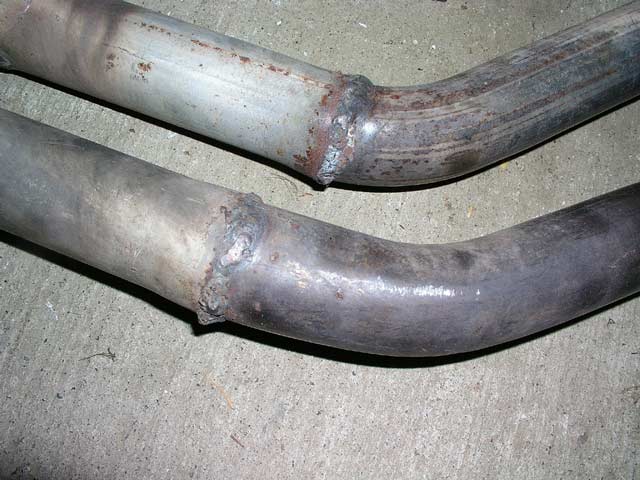
Above is the old “Team CJ” exhaust section between the headers and mufflers. Note the big sloppy weld. This was exactly how it was installed by Dan Mooney’s team. Not just purchased from them mind you… purchased and installed by crack Team CJ technicians. This is what that section is SUPPOSED to look like:
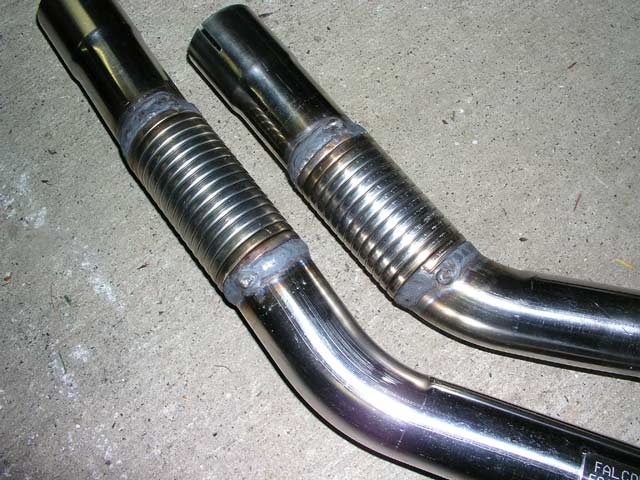
There should be a flexible section between the headers and the mufflers. This allows the engine’s natural vibration to be absorbed without putting undue stress on the rest of the exhaust. I strongly believe that this ham-handed weld is what lead my “superbly engineered” Team CJ mufflers to crack in half.
Down at the other end of the system, between the mufflers and the pipes that go under the rear suspension we find…
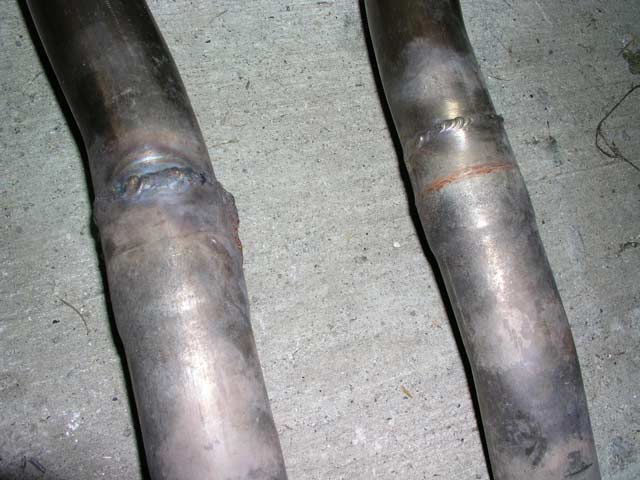
… ANOTHER ham-handed big fugly TeamCJ botched welding job.
This is what it is supposed to look like:
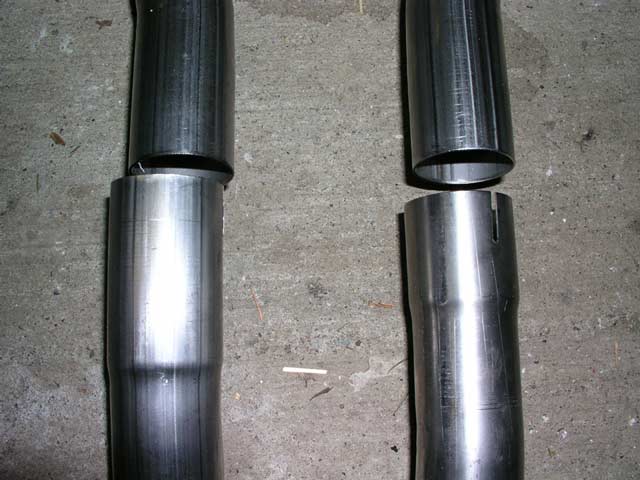
Oh well. It is obvious that this system was doomed to fail due to the way it was installed by the inept Team CJ Ninjas of Classic Jaguar in Austin, Texas.
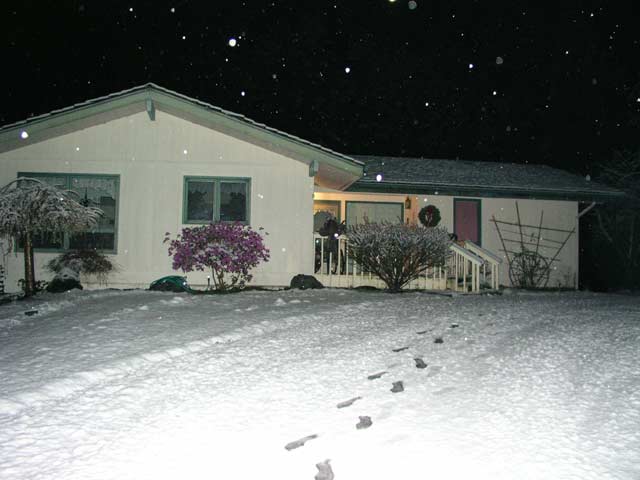
I bought some extra clamps to deal with the places where the old exhaust was welded. The old dirty clamps are currently soaking in some BioDiesel to clean them up. Unfortunately at the moment it is snowing(!) so even if I get the exhaust on I doubt I’ll be able to get much of a test drive.
I’ll update you all on how the installation goes soon, and tell my tale of dealing with a reputable, reasonable vendor with regards to my new exhaust as well.